Sound Basics
- sound can propagate through solids, liquids or gas,
- transducer devices such as microphones/speaker can convert sound wave into electrical signals and vice versa,
- a guitar string can generate sound by creating compression and rarefaction of molecules,
- reflection, refraction and attenuation of sounds waves can occur during propagation,
- the type of medium influences the speed at which sound propagates,
- at 20 degrees the speed of sound in: air is approximately 343 km/s, in water is water is approximately 1,482 m/s and in steel approximately 5,960 m/s,
Sound Formulas
Sound intensity:
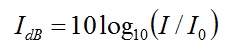
(where: IdB = Sound Intensity in decibels (dB), I = Sound intensity (W/m^2), Io = Reference Sound Pressure (10^-12 W/m^2))
Sound Pressure Level (SPL):
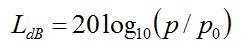
Where:
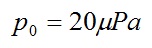
p = sound pressure in Pascals (Pa)
and
Psychoacoustics
Psychoacoustics is perception of sound by human auditory system which includes ear and brain. It is a study of psycho-physiological and physical influences on human perception of sounds.
Knowledge of psychoacoustics is required for design of:
- hi-fidelity acoustic systems,
- speech and audio communication systems,
- hearing aids,
- sound barriers,
- audio compression systems